🔄 Proxy Rotation: Scale Your Scraping with Anonymity
📚 What You'll Learn
By the end of this lesson, you will be able to:
- Explain when and why proxy rotation is used — distributing legitimate load and geo-testing — and where its ethical limits lie
- Model a proxy with health state and build a pool that selects the next healthy proxy for each request
- Implement rotation strategies: random, round-robin, success-weighted selection, and sticky sessions for login-based sites
- Run a health-feedback loop that quarantines proxies returning 403/407/429 or timeouts and retries the request through a different proxy
- Compare datacenter and residential proxies on cost, trust, detectability, and session stability
⏱️ Estimated Time: 45–60 minutes
🎯 Project: Build a proxy pool with health tracking that rotates through proxies and automatically quarantines failing ones.
Proxy rotation is the art of digital disguise - like having thousands of different identities to access websites without revealing your true location. It's essential for large-scale scraping, bypassing rate limits, accessing geo-restricted content, and maintaining anonymity. Think of it as having an army of digital ambassadors, each making requests on your behalf from different corners of the internet. Let's master the art of distributed scraping! 🎭
The Proxy Rotation Architecture
Imagine you're conducting a global survey, but instead of sending one person to ask everyone (who would quickly get exhausted and recognized), you deploy thousands of surveyors worldwide. Each proxy is like a different surveyor with their own identity, location, and approach. Together, they work harmoniously to gather data efficiently without drawing attention!
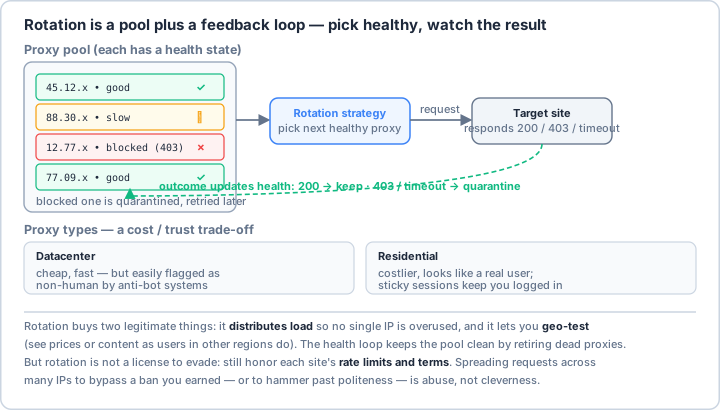
200 keeps it, a 403 or timeout quarantines it and the request retries elsewhere. Types trade off cost vs trust: datacenter (cheap, easily flagged) vs residential (costlier, looks human, sticky sessions). It's for distributing load and geo-testing — not a license to evade: still honor each site's rate limits and terms.Real-World Scenario: The Global Price Monitor 🌍
You're building a price monitoring system that tracks products across multiple e-commerce sites in different countries. You need to handle IP bans, rate limits, geo-blocking, and anti-bot measures. Your system must make thousands of requests per minute while appearing as legitimate users from various locations. Proxy rotation is your key to achieving this scale!
# First, install required packages:
# pip install requests[socks] pysocks aiohttp asyncio-throttle proxy-checker-py
import requests
import random
import time
import json
import threading
import queue
import asyncio
import aiohttp
from typing import List, Dict, Optional, Any, Tuple, Set, Union
from dataclasses import dataclass, field
from datetime import datetime, timedelta
from enum import Enum
from urllib.parse import urlparse, urljoin
import logging
from collections import defaultdict, deque
import sqlite3
from pathlib import Path
import socket
import socks
import concurrent.futures
from functools import wraps
import hashlib
import base64
from itertools import cycle
import re
# ==================== Proxy Types ====================
class ProxyType(Enum):
"""Types of proxies."""
HTTP = "http"
HTTPS = "https"
SOCKS4 = "socks4"
SOCKS5 = "socks5"
class ProxyAnonymity(Enum):
"""Proxy anonymity levels."""
TRANSPARENT = "transparent" # Reveals your IP
ANONYMOUS = "anonymous" # Hides IP but reveals proxy use
ELITE = "elite" # Hides both IP and proxy use
class ProxySource(Enum):
"""Proxy sources."""
FREE = "free"
PREMIUM = "premium"
RESIDENTIAL = "residential"
DATACENTER = "datacenter"
ROTATING = "rotating"
@dataclass
class Proxy:
"""Proxy configuration."""
host: str
port: int
type: ProxyType
username: Optional[str] = None
password: Optional[str] = None
country: Optional[str] = None
city: Optional[str] = None
anonymity: ProxyAnonymity = ProxyAnonymity.ANONYMOUS
source: ProxySource = ProxySource.FREE
response_time: Optional[float] = None
success_rate: float = 1.0
last_used: Optional[datetime] = None
last_checked: Optional[datetime] = None
failures: int = 0
total_requests: int = 0
blacklisted: bool = False
metadata: Dict[str, Any] = field(default_factory=dict)
def get_url(self) -> str:
"""Get proxy URL for requests library."""
if self.username and self.password:
auth = f"{self.username}:{self.password}@"
else:
auth = ""
return f"{self.type.value}://{auth}{self.host}:{self.port}"
def get_dict(self) -> Dict[str, str]:
"""Get proxy dict for requests library."""
proxy_url = self.get_url()
if self.type in [ProxyType.HTTP, ProxyType.HTTPS]:
return {
'http': proxy_url,
'https': proxy_url
}
else:
return {
'http': proxy_url,
'https': proxy_url
}
def __hash__(self):
"""Make proxy hashable for use in sets."""
return hash(f"{self.host}:{self.port}")
# ==================== Proxy Pool Manager ====================
class ProxyPool:
"""
Manages a pool of proxies with health monitoring and rotation.
"""
def __init__(self,
max_failures: int = 3,
min_success_rate: float = 0.5,
health_check_interval: int = 300):
self.proxies: List[Proxy] = []
self.active_proxies: Set[Proxy] = set()
self.dead_proxies: Set[Proxy] = set()
self.max_failures = max_failures
self.min_success_rate = min_success_rate
self.health_check_interval = health_check_interval
self.lock = threading.Lock()
self.proxy_cycle = None
self.last_health_check = datetime.now()
self.setup_logging()
self.setup_database()
def setup_logging(self):
"""Setup logging configuration."""
logging.basicConfig(
level=logging.INFO,
format='%(asctime)s - %(name)s - %(levelname)s - %(message)s'
)
self.logger = logging.getLogger(__name__)
def setup_database(self):
"""Setup SQLite database for proxy storage."""
self.db_path = Path("proxies.db")
self.conn = sqlite3.connect(self.db_path, check_same_thread=False)
self.conn.execute("""
CREATE TABLE IF NOT EXISTS proxies (
id INTEGER PRIMARY KEY AUTOINCREMENT,
host TEXT NOT NULL,
port INTEGER NOT NULL,
type TEXT,
username TEXT,
password TEXT,
country TEXT,
city TEXT,
anonymity TEXT,
source TEXT,
response_time REAL,
success_rate REAL,
last_used TIMESTAMP,
last_checked TIMESTAMP,
failures INTEGER DEFAULT 0,
total_requests INTEGER DEFAULT 0,
blacklisted BOOLEAN DEFAULT 0,
metadata TEXT,
UNIQUE(host, port)
)
""")
self.conn.execute("""
CREATE TABLE IF NOT EXISTS proxy_stats (
id INTEGER PRIMARY KEY AUTOINCREMENT,
proxy_id INTEGER,
timestamp TIMESTAMP,
success BOOLEAN,
response_time REAL,
status_code INTEGER,
error TEXT,
FOREIGN KEY (proxy_id) REFERENCES proxies (id)
)
""")
self.conn.commit()
def add_proxy(self, proxy: Proxy) -> bool:
"""Add a proxy to the pool."""
with self.lock:
if proxy not in self.dead_proxies:
self.proxies.append(proxy)
self.active_proxies.add(proxy)
self._save_proxy_to_db(proxy)
self.logger.info(f"Added proxy: {proxy.host}:{proxy.port}")
return True
return False
def add_proxies(self, proxies: List[Proxy]):
"""Add multiple proxies to the pool."""
added = 0
for proxy in proxies:
if self.add_proxy(proxy):
added += 1
self.logger.info(f"Added {added} proxies to pool")
self._rebuild_cycle()
def _save_proxy_to_db(self, proxy: Proxy):
"""Save proxy to database."""
try:
self.conn.execute("""
INSERT OR REPLACE INTO proxies
(host, port, type, username, password, country, city,
anonymity, source, response_time, success_rate,
last_used, last_checked, failures, total_requests,
blacklisted, metadata)
VALUES (?, ?, ?, ?, ?, ?, ?, ?, ?, ?, ?, ?, ?, ?, ?, ?, ?)
""", (
proxy.host, proxy.port, proxy.type.value,
proxy.username, proxy.password,
proxy.country, proxy.city,
proxy.anonymity.value, proxy.source.value,
proxy.response_time, proxy.success_rate,
proxy.last_used, proxy.last_checked,
proxy.failures, proxy.total_requests,
proxy.blacklisted, json.dumps(proxy.metadata)
))
self.conn.commit()
except Exception as e:
self.logger.error(f"Failed to save proxy to database: {e}")
def get_proxy(self,
country: Optional[str] = None,
anonymity: Optional[ProxyAnonymity] = None,
source: Optional[ProxySource] = None) -> Optional[Proxy]:
"""
Get next available proxy based on criteria.
"""
with self.lock:
if not self.active_proxies:
self.logger.warning("No active proxies available")
return None
# Filter proxies based on criteria
available = list(self.active_proxies)
if country:
available = [p for p in available if p.country == country]
if anonymity:
available = [p for p in available if p.anonymity == anonymity]
if source:
available = [p for p in available if p.source == source]
if not available:
self.logger.warning(f"No proxies matching criteria")
return None
# Select proxy with best success rate
available.sort(key=lambda p: (p.success_rate, -p.failures), reverse=True)
proxy = available[0]
proxy.last_used = datetime.now()
proxy.total_requests += 1
return proxy
def get_random_proxy(self) -> Optional[Proxy]:
"""Get a random proxy from the pool."""
with self.lock:
if self.active_proxies:
return random.choice(list(self.active_proxies))
return None
def get_rotating_proxy(self) -> Optional[Proxy]:
"""Get next proxy in rotation."""
with self.lock:
if not self.proxy_cycle:
self._rebuild_cycle()
if self.proxy_cycle:
try:
return next(self.proxy_cycle)
except StopIteration:
self._rebuild_cycle()
if self.proxy_cycle:
return next(self.proxy_cycle)
return None
def _rebuild_cycle(self):
"""Rebuild the proxy rotation cycle."""
if self.active_proxies:
# Sort by success rate for weighted rotation
sorted_proxies = sorted(
self.active_proxies,
key=lambda p: p.success_rate,
reverse=True
)
self.proxy_cycle = cycle(sorted_proxies)
def mark_proxy_success(self, proxy: Proxy, response_time: float = None):
"""Mark a proxy request as successful."""
with self.lock:
if response_time:
if proxy.response_time:
# Moving average
proxy.response_time = (proxy.response_time + response_time) / 2
else:
proxy.response_time = response_time
# Update success rate (guard against total_requests == 0 on the
# health-check path, which never increments it -> ZeroDivisionError)
if proxy.total_requests > 0:
proxy.success_rate = (
(proxy.success_rate * (proxy.total_requests - 1) + 1)
/ proxy.total_requests
)
else:
proxy.success_rate = 1.0
proxy.failures = 0 # Reset failure count
self._save_proxy_to_db(proxy)
self._record_proxy_stat(proxy, True, response_time)
def mark_proxy_failure(self, proxy: Proxy, error: str = None):
"""Mark a proxy request as failed."""
with self.lock:
proxy.failures += 1
# Update success rate (guard against total_requests == 0 on the
# health-check path, which never increments it -> ZeroDivisionError)
if proxy.total_requests > 0:
proxy.success_rate = (
(proxy.success_rate * (proxy.total_requests - 1))
/ proxy.total_requests
)
else:
proxy.success_rate = 0.0
self._record_proxy_stat(proxy, False, error=error)
# Check if proxy should be removed
if (proxy.failures >= self.max_failures or
proxy.success_rate < self.min_success_rate):
self._remove_proxy(proxy)
else:
self._save_proxy_to_db(proxy)
def _remove_proxy(self, proxy: Proxy):
"""Remove a proxy from active pool."""
self.logger.warning(f"Removing proxy {proxy.host}:{proxy.port} - "
f"Failures: {proxy.failures}, Success rate: {proxy.success_rate:.2%}")
self.active_proxies.discard(proxy)
self.dead_proxies.add(proxy)
proxy.blacklisted = True
self._save_proxy_to_db(proxy)
self._rebuild_cycle()
def _record_proxy_stat(self, proxy: Proxy, success: bool,
response_time: float = None, error: str = None):
"""Record proxy statistics."""
try:
# Get proxy ID from database
cursor = self.conn.execute(
"SELECT id FROM proxies WHERE host = ? AND port = ?",
(proxy.host, proxy.port)
)
row = cursor.fetchone()
if row:
proxy_id = row[0]
self.conn.execute("""
INSERT INTO proxy_stats
(proxy_id, timestamp, success, response_time, error)
VALUES (?, ?, ?, ?, ?)
""", (proxy_id, datetime.now(), success, response_time, error))
self.conn.commit()
except Exception as e:
self.logger.error(f"Failed to record proxy stat: {e}")
def check_proxy_health(self, proxy: Proxy,
test_url: str = "http://httpbin.org/ip",
timeout: int = 10) -> bool:
"""Check if a proxy is working."""
try:
response = requests.get(
test_url,
proxies=proxy.get_dict(),
timeout=timeout
)
if response.status_code == 200:
response_time = response.elapsed.total_seconds()
self.mark_proxy_success(proxy, response_time)
return True
else:
self.mark_proxy_failure(proxy, f"Status {response.status_code}")
return False
except Exception as e:
self.mark_proxy_failure(proxy, str(e))
return False
async def check_proxy_health_async(self, proxy: Proxy,
test_url: str = "http://httpbin.org/ip",
timeout: int = 10) -> bool:
"""Asynchronously check if a proxy is working."""
proxy_url = proxy.get_url()
try:
async with aiohttp.ClientSession() as session:
async with session.get(
test_url,
proxy=proxy_url,
timeout=aiohttp.ClientTimeout(total=timeout)
) as response:
if response.status == 200:
self.mark_proxy_success(proxy)
return True
else:
self.mark_proxy_failure(proxy, f"Status {response.status}")
return False
except Exception as e:
self.mark_proxy_failure(proxy, str(e))
return False
def health_check_all(self, test_url: str = "http://httpbin.org/ip"):
"""Check health of all active proxies."""
self.logger.info(f"Starting health check for {len(self.active_proxies)} proxies")
with concurrent.futures.ThreadPoolExecutor(max_workers=50) as executor:
futures = {
executor.submit(self.check_proxy_health, proxy, test_url): proxy
for proxy in list(self.active_proxies)
}
for future in concurrent.futures.as_completed(futures):
proxy = futures[future]
try:
result = future.result()
if result:
self.logger.debug(f"Proxy {proxy.host}:{proxy.port} is healthy")
except Exception as e:
self.logger.error(f"Health check failed for {proxy.host}:{proxy.port}: {e}")
self.last_health_check = datetime.now()
self.logger.info(f"Health check complete. Active: {len(self.active_proxies)}, "
f"Dead: {len(self.dead_proxies)}")
async def health_check_all_async(self, test_url: str = "http://httpbin.org/ip"):
"""Asynchronously check health of all proxies."""
tasks = []
for proxy in list(self.active_proxies):
task = self.check_proxy_health_async(proxy, test_url)
tasks.append(task)
await asyncio.gather(*tasks)
self.last_health_check = datetime.now()
def get_statistics(self) -> Dict[str, Any]:
"""Get pool statistics."""
with self.lock:
stats = {
'total_proxies': len(self.proxies),
'active_proxies': len(self.active_proxies),
'dead_proxies': len(self.dead_proxies),
'last_health_check': self.last_health_check.isoformat() if self.last_health_check else None
}
if self.active_proxies:
timed = [p.response_time for p in self.active_proxies if p.response_time]
avg_response_time = sum(timed) / len(timed) if timed else 0.0
avg_success_rate = sum(
p.success_rate for p in self.active_proxies
) / len(self.active_proxies)
stats['avg_response_time'] = avg_response_time
stats['avg_success_rate'] = avg_success_rate
# Group by country
countries = defaultdict(int)
for proxy in self.active_proxies:
if proxy.country:
countries[proxy.country] += 1
stats['countries'] = dict(countries)
# Group by type
types = defaultdict(int)
for proxy in self.active_proxies:
types[proxy.type.value] += 1
stats['types'] = dict(types)
return stats
def load_proxies_from_file(self, filepath: str):
"""Load proxies from a file."""
proxies = []
with open(filepath, 'r') as f:
for line in f:
line = line.strip()
if not line or line.startswith('#'):
continue
# Parse proxy format: host:port or host:port:username:password
parts = line.split(':')
if len(parts) >= 2:
proxy = Proxy(
host=parts[0],
port=int(parts[1]),
type=ProxyType.HTTP
)
if len(parts) >= 4:
proxy.username = parts[2]
proxy.password = parts[3]
proxies.append(proxy)
self.add_proxies(proxies)
self.logger.info(f"Loaded {len(proxies)} proxies from {filepath}")
# ==================== Proxy Scraper ====================
class ProxyScraper:
"""
Scrape free proxies from various sources.
"""
def __init__(self):
self.logger = logging.getLogger(__name__)
self.sources = [
self.scrape_free_proxy_list,
self.scrape_proxy_list,
self.scrape_sslproxies
]
def scrape_all(self) -> List[Proxy]:
"""Scrape proxies from all sources."""
all_proxies = []
for scraper in self.sources:
try:
proxies = scraper()
all_proxies.extend(proxies)
self.logger.info(f"Scraped {len(proxies)} proxies from {scraper.__name__}")
except Exception as e:
self.logger.error(f"Failed to scrape from {scraper.__name__}: {e}")
return all_proxies
def scrape_free_proxy_list(self) -> List[Proxy]:
"""Scrape from free-proxy-list.net."""
proxies = []
try:
import requests
from bs4 import BeautifulSoup
response = requests.get(
"https://free-proxy-list.net/",
headers={'User-Agent': 'Mozilla/5.0'}
)
soup = BeautifulSoup(response.text, 'html.parser')
table = soup.find('table', {'class': 'table-striped'})
if table:
for row in table.find_all('tr')[1:]:
cells = row.find_all('td')
if len(cells) >= 7:
proxy = Proxy(
host=cells[0].text,
port=int(cells[1].text),
type=ProxyType.HTTPS if cells[6].text == 'yes' else ProxyType.HTTP,
country=cells[3].text,
anonymity=self._parse_anonymity(cells[4].text),
source=ProxySource.FREE
)
proxies.append(proxy)
except Exception as e:
self.logger.error(f"Error scraping free-proxy-list: {e}")
return proxies
def scrape_proxy_list(self) -> List[Proxy]:
"""Scrape from proxy-list.download."""
proxies = []
try:
response = requests.get(
"https://www.proxy-list.download/api/v1/get?type=http",
headers={'User-Agent': 'Mozilla/5.0'}
)
for line in response.text.strip().split('\n'):
if ':' in line:
host, port = line.split(':')
proxy = Proxy(
host=host,
port=int(port),
type=ProxyType.HTTP,
source=ProxySource.FREE
)
proxies.append(proxy)
except Exception as e:
self.logger.error(f"Error scraping proxy-list: {e}")
return proxies
def scrape_sslproxies(self) -> List[Proxy]:
"""Scrape from sslproxies.org."""
proxies = []
try:
response = requests.get(
"https://www.sslproxies.org/",
headers={'User-Agent': 'Mozilla/5.0'}
)
from bs4 import BeautifulSoup
soup = BeautifulSoup(response.text, 'html.parser')
table = soup.find('table', {'class': 'table-striped'})
if table:
for row in table.find_all('tr')[1:]:
cells = row.find_all('td')
if len(cells) >= 7:
proxy = Proxy(
host=cells[0].text,
port=int(cells[1].text),
type=ProxyType.HTTPS,
country=cells[3].text,
anonymity=self._parse_anonymity(cells[4].text),
source=ProxySource.FREE
)
proxies.append(proxy)
except Exception as e:
self.logger.error(f"Error scraping sslproxies: {e}")
return proxies
def _parse_anonymity(self, text: str) -> ProxyAnonymity:
"""Parse anonymity level from text."""
text = text.lower()
if 'elite' in text:
return ProxyAnonymity.ELITE
elif 'anonymous' in text:
return ProxyAnonymity.ANONYMOUS
else:
return ProxyAnonymity.TRANSPARENT
# ==================== Smart Proxy Rotator ====================
class SmartProxyRotator:
"""
Intelligent proxy rotation with automatic failover and retry logic.
"""
def __init__(self, proxy_pool: ProxyPool,
max_retries: int = 3,
retry_delay: float = 1.0):
self.proxy_pool = proxy_pool
self.max_retries = max_retries
self.retry_delay = retry_delay
self.session_proxies: Dict[str, Proxy] = {}
self.logger = logging.getLogger(__name__)
def request_with_retry(self, method: str, url: str,
**kwargs) -> Optional[requests.Response]:
"""
Make request with automatic proxy rotation and retry.
"""
last_exception = None
used_proxies = set()
for attempt in range(self.max_retries):
# Get a proxy that hasn't been tried yet
proxy = self._get_unused_proxy(used_proxies)
if not proxy:
self.logger.warning("No more proxies available")
break
used_proxies.add(proxy)
try:
# Make request
start_time = time.time()
response = requests.request(
method,
url,
proxies=proxy.get_dict(),
timeout=kwargs.pop('timeout', 30),
**kwargs
)
response_time = time.time() - start_time
# Check if response is valid
if response.status_code == 200:
self.proxy_pool.mark_proxy_success(proxy, response_time)
return response
elif response.status_code in [403, 407, 429]:
# Proxy might be blocked
self.proxy_pool.mark_proxy_failure(proxy, f"Status {response.status_code}")
else:
# Other status codes might not be proxy's fault
return response
except requests.exceptions.ProxyError as e:
self.logger.warning(f"Proxy error with {proxy.host}:{proxy.port}: {e}")
self.proxy_pool.mark_proxy_failure(proxy, str(e))
last_exception = e
except requests.exceptions.Timeout as e:
self.logger.warning(f"Timeout with proxy {proxy.host}:{proxy.port}")
self.proxy_pool.mark_proxy_failure(proxy, "Timeout")
last_exception = e
except Exception as e:
self.logger.error(f"Unexpected error: {e}")
last_exception = e
# Delay before retry
if attempt < self.max_retries - 1:
time.sleep(self.retry_delay * (attempt + 1))
if last_exception:
raise last_exception
return None
def _get_unused_proxy(self, used_proxies: Set[Proxy]) -> Optional[Proxy]:
"""Get a proxy that hasn't been used in current retry cycle."""
for _ in range(len(self.proxy_pool.active_proxies)):
proxy = self.proxy_pool.get_rotating_proxy()
if proxy and proxy not in used_proxies:
return proxy
return None
def get_sticky_session(self, session_id: str) -> Proxy:
"""Get or create a sticky session with a specific proxy."""
if session_id not in self.session_proxies:
proxy = self.proxy_pool.get_proxy()
if proxy:
self.session_proxies[session_id] = proxy
return self.session_proxies.get(session_id)
def release_sticky_session(self, session_id: str):
"""Release a sticky session."""
if session_id in self.session_proxies:
del self.session_proxies[session_id]
async def async_request(self, method: str, url: str,
**kwargs) -> Optional[aiohttp.ClientResponse]:
"""Make async request with proxy rotation."""
proxy = self.proxy_pool.get_rotating_proxy()
if not proxy:
return None
try:
async with aiohttp.ClientSession() as session:
async with session.request(
method,
url,
proxy=proxy.get_url(),
**kwargs
) as response:
if response.status == 200:
self.proxy_pool.mark_proxy_success(proxy)
return response
else:
self.proxy_pool.mark_proxy_failure(proxy, f"Status {response.status}")
return None
except Exception as e:
self.proxy_pool.mark_proxy_failure(proxy, str(e))
return None
# ==================== Proxy Middleware for Scrapy ====================
class ScrapyProxyMiddleware:
"""
Scrapy middleware for proxy rotation.
"""
def __init__(self, proxy_pool: ProxyPool):
self.proxy_pool = proxy_pool
self.logger = logging.getLogger(__name__)
@classmethod
def from_crawler(cls, crawler):
"""Create middleware from crawler."""
# Initialize proxy pool
proxy_pool = ProxyPool()
# Load proxies from settings
proxy_list = crawler.settings.get('PROXY_LIST')
if proxy_list:
proxy_pool.load_proxies_from_file(proxy_list)
return cls(proxy_pool)
def process_request(self, request, spider):
"""Add proxy to request."""
proxy = self.proxy_pool.get_rotating_proxy()
if proxy:
request.meta['proxy'] = proxy.get_url()
# Add authentication if needed
if proxy.username and proxy.password:
auth = base64.b64encode(
f"{proxy.username}:{proxy.password}".encode()
).decode()
request.headers['Proxy-Authorization'] = f'Basic {auth}'
# Store proxy in meta for later reference
request.meta['proxy_object'] = proxy
def process_response(self, request, response, spider):
"""Process response and update proxy stats."""
proxy = request.meta.get('proxy_object')
if proxy:
if response.status == 200:
self.proxy_pool.mark_proxy_success(proxy)
elif response.status in [403, 407, 429]:
self.proxy_pool.mark_proxy_failure(proxy, f"Status {response.status}")
# Retry with different proxy
return self._retry_with_new_proxy(request, spider)
return response
def process_exception(self, request, exception, spider):
"""Handle exceptions and retry with new proxy."""
proxy = request.meta.get('proxy_object')
if proxy:
self.proxy_pool.mark_proxy_failure(proxy, str(exception))
return self._retry_with_new_proxy(request, spider)
def _retry_with_new_proxy(self, request, spider):
"""Retry request with a new proxy."""
retries = request.meta.get('proxy_retry_times', 0)
max_retries = spider.settings.get('PROXY_RETRY_TIMES', 3)
if retries < max_retries:
request.meta['proxy_retry_times'] = retries + 1
request.dont_filter = True
return request
return None
# Example usage
if __name__ == "__main__":
print("🔄 Proxy Rotation Examples\n")
# Example 1: Initialize proxy pool
print("1️⃣ Initializing Proxy Pool:")
pool = ProxyPool(max_failures=3, min_success_rate=0.5)
# Add some example proxies
example_proxies = [
Proxy("192.168.1.1", 8080, ProxyType.HTTP, country="US"),
Proxy("192.168.1.2", 8080, ProxyType.HTTPS, country="UK"),
Proxy("192.168.1.3", 1080, ProxyType.SOCKS5, country="DE"),
]
pool.add_proxies(example_proxies)
print(f" Added {len(example_proxies)} proxies to pool")
# Example 2: Get proxies with different strategies
print("\n2️⃣ Proxy Selection Strategies:")
# Random proxy
proxy = pool.get_random_proxy()
if proxy:
print(f" Random proxy: {proxy.host}:{proxy.port}")
# Rotating proxy
proxy = pool.get_rotating_proxy()
if proxy:
print(f" Rotating proxy: {proxy.host}:{proxy.port}")
# Country-specific proxy
proxy = pool.get_proxy(country="US")
if proxy:
print(f" US proxy: {proxy.host}:{proxy.port}")
# Example 3: Pool statistics
print("\n3️⃣ Pool Statistics:")
stats = pool.get_statistics()
print(f" Total proxies: {stats['total_proxies']}")
print(f" Active proxies: {stats['active_proxies']}")
print(f" Dead proxies: {stats['dead_proxies']}")
# Example 4: Smart rotation with retry
print("\n4️⃣ Smart Proxy Rotation:")
rotator = SmartProxyRotator(pool, max_retries=3)
print(" Making request with automatic proxy rotation...")
# This would make an actual request in production
# response = rotator.request_with_retry('GET', 'http://httpbin.org/ip')
print(" Request would use proxy rotation and retry on failure")
# Example 5: Free proxy scraping
print("\n5️⃣ Free Proxy Scraping:")
scraper = ProxyScraper()
print(" Available scraping sources:")
print(" • free-proxy-list.net")
print(" • proxy-list.download")
print(" • sslproxies.org")
# This would actually scrape proxies
# free_proxies = scraper.scrape_all()
# pool.add_proxies(free_proxies)
# Example 6: Health checking
print("\n6️⃣ Proxy Health Checking:")
print(" Health check methods:")
print(" • Synchronous: check_proxy_health()")
print(" • Asynchronous: check_proxy_health_async()")
print(" • Batch: health_check_all()")
# Example 7: Sticky sessions
print("\n7️⃣ Sticky Sessions:")
session_proxy = rotator.get_sticky_session("user_123")
if session_proxy:
print(f" Sticky session for user_123: {session_proxy.host}:{session_proxy.port}")
rotator.release_sticky_session("user_123")
print(" Session released")
# Example 8: Proxy types
print("\n8️⃣ Proxy Types:")
proxy_types = [
("HTTP", "Standard HTTP proxy"),
("HTTPS", "SSL-enabled proxy"),
("SOCKS4", "SOCKS version 4 proxy"),
("SOCKS5", "SOCKS version 5 with authentication")
]
for proxy_type, description in proxy_types:
print(f" {proxy_type}: {description}")
# Example 9: Anonymity levels
print("\n9️⃣ Anonymity Levels:")
anonymity_levels = [
("Transparent", "Reveals your real IP to the target"),
("Anonymous", "Hides your IP but reveals proxy usage"),
("Elite", "Hides both your IP and proxy usage")
]
for level, description in anonymity_levels:
print(f" {level}: {description}")
# Example 10: Best practices
print("\n🔟 Proxy Rotation Best Practices:")
best_practices = [
"🔍 Always verify proxy quality before use",
"♻️ Rotate proxies regularly to avoid detection",
"🏥 Monitor proxy health continuously",
"🌍 Use geographically appropriate proxies",
"🔐 Prefer authenticated proxies for security",
"⚡ Balance between speed and anonymity",
"💰 Consider premium proxies for critical tasks",
"📊 Track success rates and response times",
"🚫 Remove dead proxies automatically",
"🔄 Implement retry logic with different proxies"
]
for practice in best_practices:
print(f" {practice}")
print("\n✅ Proxy rotation demonstration complete!")
Key Takeaways and Best Practices 🎯
- Verify Proxy Quality: Always test proxies before adding them to your pool.
- Monitor Health Continuously: Regular health checks ensure proxy reliability.
- Implement Smart Rotation: Use different strategies for different use cases.
- Handle Failures Gracefully: Automatic retry with different proxies.
- Track Metrics: Monitor success rates, response times, and failures.
- Use Appropriate Proxy Types: Choose between HTTP, HTTPS, SOCKS based on needs.
- Consider Anonymity Levels: Balance between anonymity and performance.
- Respect Rate Limits: Even with proxies, be respectful of target servers.
Proxy Rotation Best Practices 📋
Mastering proxy rotation transforms you from a single-threaded scraper to a distributed data collection network. You can now bypass rate limits, access geo-restricted content, maintain anonymity, and scale your scraping operations globally. Whether you're monitoring prices, collecting market intelligence, or building large-scale data pipelines, proxy rotation is your key to reliable, scalable web scraping! 🌐
📓 Learning Journal
Keep a learning journal — digital or physical. After this lesson, take a few minutes to write down:
- Key concepts you learned
- Techniques that clicked for you
- Questions or confusion points to revisit
- Ideas you want to try
- Your progress and feelings about learning this
✍️ This lesson's prompt: Proxy rotation makes scaling easy, which also makes overstepping easy. How will you decide, for a given site, where "distributing legitimate load" ends and "evading a limit you should respect" begins?
📝 Lesson Summary
🎓 Key Takeaways
- Rotation is a pool plus a health-feedback loop: pick the next healthy proxy, send the request, and let the outcome update that proxy's state.
- A
200keeps a proxy in play; a403/407/429or timeout quarantines it and the request retries through a different one. - Proxy types trade cost for trust — datacenter proxies are cheap and fast but easily flagged, while residential proxies cost more but look human and support sticky sessions.
- Rotation distributes load and enables geo-testing; it is never a license to evade a rate limit or ban you've earned — still honor each site's limits and terms.
🎉 What You've Accomplished
You can now build a self-healing proxy pool: it tracks each proxy's success rate and response time, rotates intelligently, drops dead proxies automatically, and retries failed requests elsewhere — the backbone of reliable, respectful, large-scale collection.
❓ Common Questions at This Stage
Does rotating proxies mean I can ignore a site's rate limits?
No. Rotation spreads legitimate traffic and helps you test from different regions, but the site's limits and terms still apply. Rotating IPs specifically to exceed politeness or dodge a ban you earned is abuse, not scaling.
Are free proxies good enough for production?
Rarely. Free proxies are unreliable, slow, and often already blacklisted — fine for testing your pool logic, but for anything that matters, paid datacenter or residential proxies with health monitoring pay for themselves.
When should I use datacenter vs residential proxies?
Datacenter proxies are cheaper and faster, so use them where detection isn't aggressive. Residential proxies look like real users and support sticky sessions, so reach for them when a site is sensitive or requires staying logged in — at higher cost.
🔭 Looking Ahead
Next you'll feed the requests your rotator makes into a full data pipeline — validating, transforming, and storing everything you collect reliably at scale.
✅ Before the Next Lesson
- Extend the pool so a proxy is quarantined after N consecutive failures and revisited later, rather than dropped forever.
- Add success-weighted selection and compare its behavior to plain round-robin on a set of proxies with mixed reliability.
- Write your Learning Journal entry for this lesson.
🌟 Encouragement for the Journey
Scaling responsibly is a real skill: the best data engineers move volume without becoming a nuisance. A pool that heals itself and respects its targets is something you can run with confidence. Keep going.
Pro Tip: Proxy rotation is like managing a fleet of vehicles - you need the right type for each job, regular maintenance, and backup options when one breaks down. Start with a diverse pool of proxies from different providers and geographic locations. Implement intelligent rotation that considers proxy health, response time, and success rate. Free proxies are tempting but unreliable - use them for testing but invest in premium proxies for production. Residential proxies are best for avoiding detection but cost more; datacenter proxies are faster and cheaper but more easily detected. Always implement health checking - a dead proxy is worse than no proxy. Use sticky sessions when scraping sites that require login. Monitor your proxy performance metrics and automatically remove underperforming ones. Remember that proxies aren't a license to abuse - they're a tool for scaling legitimate data collection. Most importantly: have a fallback strategy when all proxies fail!